The Council of the International Civil Aviation Organization (ICAO) has adopted six eligible emission reduction systems for the CORSIA mechanism
In 2016, the International Civil Aviation Organization adopted the International Aviation Carbon Offsetting and Emission Reduction Plan (CORSIA) to deal with carbon dioxide emissions from international aviation. It is predicted that the carbon offset and emission reduction plan of international aviation will reduce about 2.5 billion tons of carbon dioxide from 2021 to 2035, that is, the average annual reduction of 165 million tons of carbon dioxide.
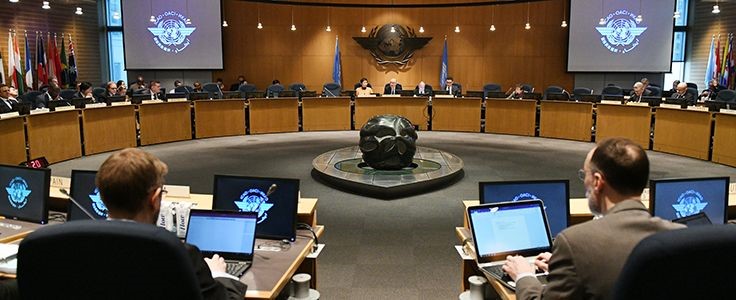
At the ICAO Council Meeting held in Montreal, Canada, from March 2 to 20, 2020, the Council decided to be eligible to participate in the six emission reduction project systems in the CORSIA pilot phase from 2021-2023. The six emission reduction project systems include:
American Carbon Registry (ACR)
China GHG Voluntary Emission Reduction Program
Clean Development Mechanism (CDM)
Climate Action Reserve (CAR)
The Gold Standard (GS)
Verified Carbon Standard Program (VCS)
The Council's decision is based on the recommendations of its Technical Advisory Body (TAB). According to TAB's recommendations on "qualification time frame" and "unit date qualification", qualified carbon emission reduction indicators must be generated by emission reduction projects put into operation after January 1, 2016, and the time shall not be later than December 31, 2020. In addition, qualified carbon emission reduction indicators must be generated from the type of emission reduction projects recognized by each qualified emission reduction system. The list of eligible emission systems will eventually be published on the ICAO CORSIA website.
TAB emphasized the following criteria in its evaluation and recommendation of the scheme:
Permanency: The carbon offset amount must be permanent emission reduction, avoidance or carbon sequestration, that is, any risk that emission reduction can be reversed must be eliminated, so measures to monitor, mitigate and compensate for leakage events need to be developed.
Additionality: The carbon offset project must generate additional emission reduction, avoidance or removal credits, including any greenhouse gas reduction or removal beyond the requirements of laws, regulations or legally binding requirements.
Avoid double counting of mitigation obligations: measures must be taken to avoid repeated issuance, reuse and claims, such as claims that may be filed by airlines and host countries of emission reduction activities.
Monitoring, reporting and verification: the emission reductions are calculated in a conservative and transparent way. Before issuing the offset amount, it needs to be verified by an approved independent entity. Such verification should be based on accurate measurement and monitored regularly.
Public disclosure of sustainable development: the project shall list the standards consistent with the sustainable development goals.

CORSIA will be implemented in phases, taking into account the special circumstances and respective capabilities of each country.
From 2021 to 2026, during the pilot and/or the first phase, only flights between voluntary participating countries will be affected by the offset requirement.
From 2027, all international flights will comply with the offset requirement, except for flights to and from least developed countries, small island developing States, landlocked developing countries and countries less than 0.5% of the international RTK, unless they voluntarily participate.
However, all civil aviation operators must report emissions from all international flights since January 1, 2019, including flights to and from exempted countries.
Related Links
IATA- CORSIA: https://www.iata.org/en/policy/environment/corsia/
ICAO- Environment:
https://www.icao.int/environmental-protection/CORSIA/Pages/default.aspx